

Click to learn more.
In previous articles I have addressed the question of whether Judaism is more a religion or a nation. Although I conclude that Jews are more nation than religion (in my opinion), nation and religion are tied closely together in Judaism as the nation was founded in a covenant (contract) with Hashem (G-d). If Jews appear to be more a religion today, it is largely because Jews still carry the effects of centuries of exile and foreign influence. Living among European Christians and under Islam, Jews have responded to the presence of these universalist religions by adopting similar overtones. Thus, has Judaism (-ism from ismo the very concept of an ideology or belief system being derived from Western scholarship) adopted religious character by adapting to a religious environment.
Sadly, although ancient Israel has been reborn in the form of the modern State of Israel, the process of shaking off these foreign influences has only just begun. Secular Jews in Israel live much as secular westerners do but with nuanced Jewish culture. Religious Jews live a religious lifestyle built over centuries from Rabbinical practices under the influences of Christianity and Islam. Orthodox Jews (Haredim) brought the Shtetls of Eastern Europe with them to Israel. Perhaps the time has come to cast off these foreign ideas and look to a pure and unique Jewish national identity, something more comparable to the way Jews lived before the revolt against the Romans and the Second Exile circa 70 CE (823 AUC). These people lived in what the Romans called Judea, from Yehudah the southern kingdom which drew its name from the eponymous tribe. Who were the Judeans, how did they live, and what did they think about nationality and religion?
Meet the Judeans
In his book Pax, British historian Tom Holland seeks to breakdown misconceptions about the ancient world as he travels through the history of the Roman Empire from the end of the Julio-Claudian Dynasty through the beginning of the Antonines (the death of Nero through the death of Hadrian). Nero’s death took place as the Jews were in open rebellion against Roman rule, due to the brutal and inadvisable conduct of Gessius Florus. Holland notes that the Judeans of that time (the people of Judea) were starkly different from how we see or imagine Jews today. He thus spends considerable time explaining who these people were and what they believed about themselves, at least as best we can construct such information from the archaeological record and sources of the time.
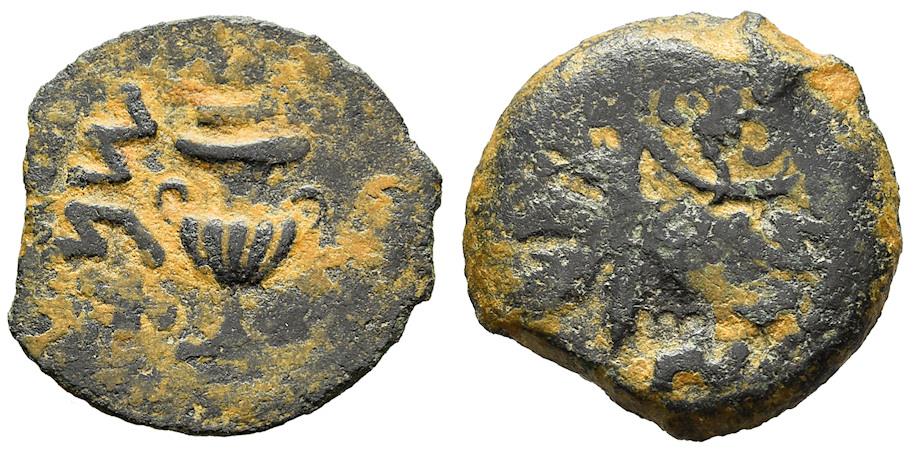
While western academics may look upon the notion of dividing modern Jews from their ancient ancestors as a means of weakening the case for Israel, much as Islamic thinkers try to excuse references to Isra’il in the Qur’an by claiming that today’s Jews are not the Israelites; the fact remains that while modern Jews are inarguably descended from these ancient Judeans, there are in truth many differences. Quite apart from any anti-Israel agenda, the similarities between modern Jews and ancient Judeans far outweigh the more technical differences between them.
What Do We Know About the Judeans?
What we know comes from excavations, the writings of Philo of Alexandria (Philo the Jew), Josephus (Yoseph ben Mattatyah), and from other historians in that time. Roman sources like Tacitus held strong anti-Judean biases common to the Flavian era. It was a very important policy of the Flavians (Roman Emperors Vespasian, Titus, and Domitian) that they had defeated the Judean revolt and crushed the Jews, regarding them as a foreign people conquered by Rome rather than as a rebellious province brought to heel. This justified the celebration of a triumph in Rome and excused their harsh tax policies. It was thus in their best interests to portray the Jews as barbarians crushed and subjugated by Rome, when this is far from the reality.
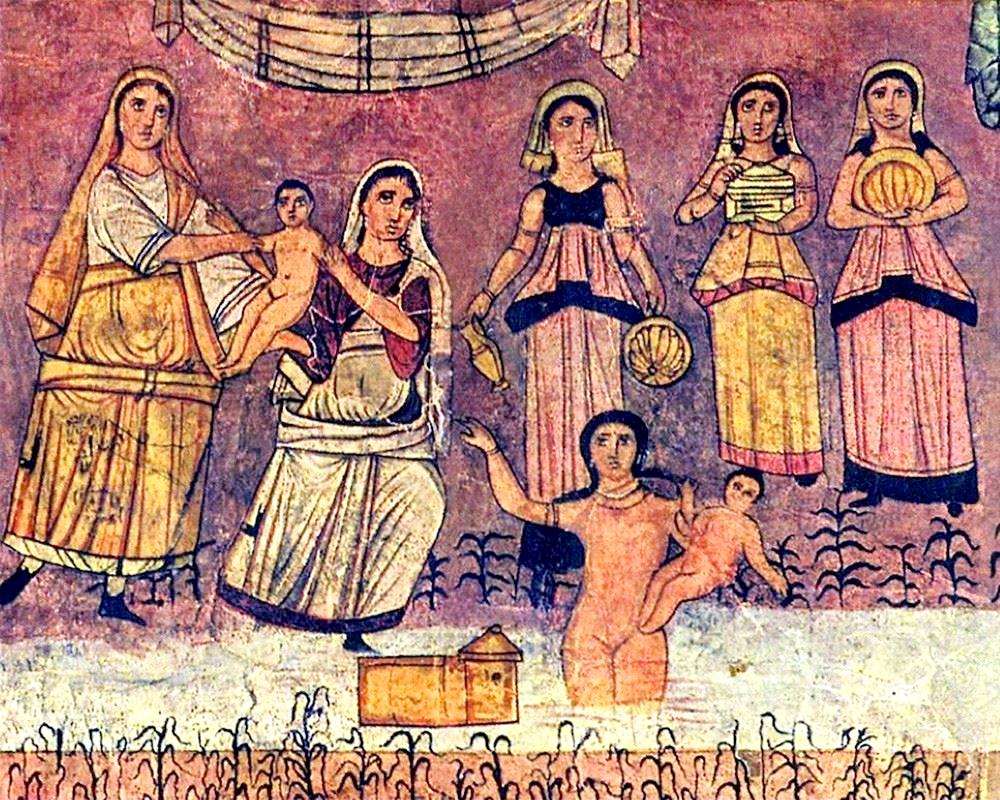
Meanwhile, Josephus is eager to portray the Jews in a more respectable light, but in this he seeks to make Judeans appealing to Romans emphasizing the ancient origins, proud history, and virtues of the Judeans such that Romans should regard them with a degree of respect. Naturally, Josephus was under the patronage of Vespasian so he also did what he could to exaggerate the war and make it a great conflagration, a struggle worthy of comparison with the conquests of Scipio Africanus, Pompey Magnus, or Julius Caesar. This includes greatly exaggerating (at times by a factor of 10) the number of combatants in any given battle. The writings of historians like Tacitus and Josephus must be taken with many grains of salt.
What can be known with any degree of honesty of the ancient Judeans must be cobbled together from these disparate sources taking into account their myriad agendas. Archaeological excavations show a fairly humble but not impoverished people relative to the greater Roman world. In Jerusalem, homes that have been excavated are simple not extravagant. They are clearly affluent but not so decadent as Roman patricians. One striking difference from the rest of the Greco-Roman World stands out: there are no personal idols. Most homes and public buildings in the Roman world of that era have evidence of household patron deities, typically statues or statuettes. These are wholly lacking in Judean homes and settlements. Even the cups and plates found in these homes are devoid of the images of deities.

renovation and the re-opening in May/June 2024. Click to learn more.
Ancient peoples, especially in the Eastern Roman Empire, were quite superstitious. They kept idols close, plastered images of their deities on everything including their cups and plates, and celebrated these deities at every turn. The absence of these symbols of superstition is evidence that the Judeans were dutiful to their national beliefs. It is true that in ancient times there is evidence of idolatry among the Israelites, as evidenced by excavations of settlements from the era between the entry of Israelites into the land and the rise of the Kingdom of David. The books of history and those of the Prophets in the Tanakh speak of such idolatry among ancient Israelites. Something about the Maccabee Revolt (167-160 BCE) just prior to Roman occupation, seems to have instilled in the Judeans a national pride and an eagerness to be true to the laws of their ancestors. Judeans of the Roman era were not so much astray as those ancient Israelites who had strayed from Torah.
The Judeans were a people passionately dedicated to their belief in a single deity. Tacitus speaks of the arrogance of the Jews to assume that their “one G-d” created everything when, as he states: “certainly everyone knows there are many g-ds.” The monotheism of the Judeans was offensive to the Greco-Roman World. Judeans were also known to be dedicated to their moral beliefs. The Greeks complained endlessly about the barbarism of the Judeans: that they would circumcise their boys, that they refused to lie with boys or men as with women, and that they loved and cared for their wives (a weakness in Greek thought). The Greek found it especially embarrassing that Judeans treated women as near equals in many cases and did not live in separate spaces from women. The Judeans also rested one day of the week demonstrating that they were clearly a lazy and unproductive people; this from Greeks who worked their slaves seven days a week, working them even to their deaths if the master wished it.
Thus, the Judeans presented an enigma to the Greco-Romans. They also presented a challenge: the Romans incorporated new peoples into the Empire by adding their local deities to the greater pantheon and, while respecting local beliefs to a small degree, established the supremacy of their own Roman deities. No one can argue that in the perceptions of the Roman world the chief Roman deity, Jupiter Optimus Capitolinus, was not the ultimate deity exerting influence and control over the entire known world. Other deities in the pantheon were inferior to Rome’s primary deity. The Romans themselves had associated Jupiter with Zeus to strengthen their ties to the Greeks, for example. Still, Gauls worshipped their petty g-ds and performed rituals and rights, even as they submitted to the Roman aegis. It took time to establish the supremacy of Roman deities, but eventually, even the willful Gauls came around.
Except, for those pesky Judeans. The Judeans were unwilling to believe in any other deities. Their “one true G-d” could not be added neatly to a pantheon nor could He be coopted into or incorporated into another deity. How could the Romans argue that Hashem was simply one manifestation of Jupiter when Hashem is so clearly a deity who presented Himself exclusively to the Judeans? The Judean G-d stood alone as the sole deity, creator, and ruler. The relationship betwixt the Romans and the Judeans was, thus, always precarious as it had been with the Macedonians (the Seleucids in particular). Roman rule in Judea was always troubled. In the end, the Romans settled for allowing the Judeans to practice their beliefs as they pleased (for the most part) as Alexander the Great had done. The priests at the Temple in Jerusalem were required to make a daily offering to the Judean G-d on behalf of Rome. A small concession relative to the coercion of beliefs the Romans exerted on other peoples.

Many Romans seem to have been impressed by the resistance offered by the Judeans. When Pompey Magnus conquered the eastern Mediterranean circa 63 BCE (691 AUC). The Romans respected the Judeans whose priests did not interrupt their service or flee as Roman soldiers entered the Temple and cut them down. Pompey did not believe that the Judeans worshipped a deity who was not represented in any physical way. He was certain that when he entered the Temple he would find a statue in the center of the edifice, in the Holy of Holies. When he entered the Holy of Holies he is purported to have found only the name of Hashem (the tetragrammaton – YHVH) written on the wall. Superstitious as ever, many Romans believed that this had contributed to Pompey’s inglorious downfall. Pompey came to an ignominious end as he was slain on a beach in Egypt by an ally turned enemy, while his greatest rival was in pursuit: Julius Caesar.
On several occasions when the Romans tried to press the issue of religion with the Judeans and the latter defended their position with passion. When Emperor Tiberius declared himself a deity, he had his likeness placed all over the empire. Statues and busts of Tiberius were mandatory throughout the jurisdiction of Rome. To the polytheists of the time, this was just one more deity to appease and pay homage to; to the Judeans it was a grave offense. When the Roman army came in force to install these busts in Jerusalem, the city’s population came out to protest the act. They came unarmed and basically told the Romans that if they wanted to setup the idols in Jerusalem they would have the slaughter those who has sortied to protest the busts (a large host of people if Josephus is to be believed). The Romans were so moved by this act of defiance and the willingness to sacrifice their lives for this cause that the governor of Syria complied with the wishes of the Judeans, risking his own potential execution. This left Jerusalem free of the idols. The death of Tiberius shortly thereafter relieved the situation as the idols were no longer required.
Nevertheless, the Judeans worshipped only Hashem, they lived in simple houses devoid of idols and images, they lived lives in accordance with their national beliefs. People awoke daily and did their work, cared for their families, prepared and consumed their food, and celebrated the holidays as Judeans. It is clear that outside of the priesthood, there was very little ritual or religious activity. No one prayed twice or thrice daily, no one dressed in funny black hats, and people did not devote their every waking hour to the study of the scriptures. Priests and Levites studied religion and performed rituals. The people dutifully tithed to the Temple and learned from the priests. They celebrated the holidays, made pilgrimages to Jerusalem (by the hundreds of thousands if Josephus is to be believed), and refused to let others bend the national identities, beliefs, and traditions of the Judeans to the benefit of foreign interests. They were willing to risk their lives en masse to defend their beliefs and way of life.
The Dead Sea Scrolls
The Dead Sea Scrolls were discovered in the caves of the Jordan Valley starting in 1947. These appear to have been stashed along with gold and other valuables by those Judeans who escaped the apocalypse in Jerusalem in 70 CE. These scrolls give us some insight into what the Zealots of the late Second Temple Era were like. These Zealots were the ones who rose up against the Romans and brought about the destruction of Jerusalem and the Temple. Other Judeans, including the high priest Anan had attempted to seek a compromise. Better to pay off the Romans and beg forgiveness for the Revolt than to be slaughtered by them and taken into slavery. We will never know if Anan could have succeeded in negotiating for peace, because another priest, a zealot named Eleazer assumed control and prevented peace negotiations. Later zealot leaders like Yochanan and Shimon seem to have risen to power due to brute military prowess rather than any kind of legitimate authority.

The Dead Sea Scrolls are littered with references to the afterlife and powerful angels. Righteous armies were thought to be escorted by angels, those who died in the service of righteousness were thought to be guaranteed an afterlife in paradise, and many books were intended to look like later prophecies attributed to Yeshaiyahu (Isaiah), Yekhezkel (Ezekiel), and others. These prophecies were distinctly written to grant legitimacy to the idea of divine invincibility for the Zealots and their cause. Thus, they would rise up and fight ferociously against the Romans; against inevitability. Josephus tries to give this zealotry a positive spin in order to earn Roman respect, but it is clear he believed many of the zealots to be insane. He uses every opportunity in his histories, especially in the speech given by Agrippa to the assembly in Jerusalem, as his sister Bernice stood with her head shaven and dressed for mourning. Even so, Josephus tells us he was originally a general in the Judean army. If he is to believed, therefore, he had first hand experience with Judean zealotry.
What we find here is an excellent lesson in what not to be. Jews today can learn from the Zealots how not to believe or behave. Be patient, perspicacious, and have a shrewd longterm strategy. The belief in an afterlife, in angels, in the supernatural in general is harmful. It is safe to say we should not place too much stock in it. Better to be rational, intelligent, and practical. This outlines the dangers of too much “religion,” too much blind faith, and not enough thought. These Zealots were popular among Judeans but clearly did not represent all of them. Nevertheless, like the leaders of Japan in the 1930s and 40s, they were brought to ruin by a deluded minority.
What Lessons Can We Learn From the Judeans?
There are lessons in these truths. Rather than seek religious focus, lead a life of dogmas and superstitions, and devote oneself entirely to religious practice, one should simply live as a member of a nation founded by Hashem. Such a life is fairly similar to secularism but maintains significant religious devotion. There should be a greater emphasis on morality than exists in either secular or religious cultures in Israel today. Religious men marry young often in matches that are somewhat arranged. They spend very little time with their families early on while their wives turn out many children and work to support their husbands while they study in Yeshiva (religious school). Orthodox women in Israel often develop osteoporosis before they turn 30 from malnourishment, overwork, and a lack of sleep. These men then have the audacity to hire prostitutes because they find little love or passion in their marriages. How is any of this according to Torah?! How is any of this moral? A man should marry for love, work to support his family and study when he can, and he and his wife should be devoted passionately to their life together.
One also should not live a life devoid of religious belief, empty of higher meaning, and lacking in proper moral guidance. Such a life is one of misery. Secular Israelis are likewise miserable. They live modern lives, many observe some small degree of Jewish tradition, but there are many who are atheists or who are devoted to the Marxist religion. They are nihilistic and hedonistic. Such a life is empty, one need only turn to Kohelet (Ecclesiastes) to learn that there is nothing in this life, it is vanity (vanity of vanities – in Hebrew vaporous).
There is a balance to be achieved in the process of restoring nationhood to Judaism today and it involves seeking a middle ground, in light of the example of the Judeans. This entails, a devotion to faith in the national identity and a lack of overtly ascetic religious devotion (in the modern sense). Jews should live our lives much as the ancient Judeans did, without the dangerous dogmas. Each day we live normal, modern, lives but in a Jewish context and adhering to Jewish law and morality (understood without superstition). Resting on Shabbat, observing the holidays, teaching our children the Torah, and observing its laws. This is the tradition of the Israelite nation, it has worked for us for 3500 years and we are still here to perpetuate it.
Shabbat is a day of rest. One should not go to their job on that day, lift heavy things, perform servile labour, or burn fire in their homes (electricity is not fire). But Shabbat also does not have to involve a dogmatic effort to avoid every conceivable modern comfort. Air conditioning, heating (preferably without fire), the use of technology, and the operation of mechanisms (cars for example), need not be avoided out of some misplaced sense of dogmatic devotion to a spiritual or supernatural belief in Hashem. The Torah has nothing to say on the topics of electricity, mechanization, or modern technology. It is up to us to ensure that these do not defeat the spirit of Shabbat if not the law.
What Hashem wants from us, He has had recorded in his books: most of all loyalty to Him and adherence to His moral laws. Likewise, we should not ignore the religious overtones of our national identity: we are a nation founded by Hashem. This includes certain responsibilities and duties that other nations do not possess. People should gather in Jewish communities for collective activities on Shabbat and the holidays. We should celebrate community and our collective identity. These are among the many reasons that Israel is essential to Judaism. We must be a community with a strong connection to one another, we must look out for our fellow Jews. We should be the best people we can be to present a light onto the nations.

We must also protect one another from harm. On October 7th, 2023 the Jewish nation witnessed once again the horrors that result when we allow our enemies to prosper in their machinations to destroy us, as we try to coexist with them. Morally, we must seek a security situation in which we do not have to fear such atrocities. This emphasizes a focus on national unity and security over superstition. No amount of Torah study, prayer, or attendance in Synagogue could possibly have prevented the events of 10/7. Still, without some Torah study, prayer, and practice there is no underlying purpose for the nation’s existence.
Striking A Balance
Personally, I don’t believe in the supernatural or in dogmas. I know Hashem is very real, the natural world we experience is part of Him, and thus I eschew magic, supernatural miracles, and the belief in an afterlife. In truth, most Jews today agree with me in this. I have had many conversations with secular Israelis and low-practicing Jews in diaspora wherein they have expressed general agreement (these constituting the vast majority of Jews). Religious Jews, Orthodox Jews, and especially devoted Karaites (who tend to be more ascetic and devoted to their beliefs), tend to agree in part with my approach but are unwilling to be separated from their beliefs in the supernatural. There is nothing wrong with diversity in our community. So long as most people can operate between the boundaries of a basic dedication to the national identity, we can live on a spectrum that includes the religious and the semi-secular.
The boundaries can be tricky, however. Many secular Jews are dedicated to a belief in Marxist religion, which holds tenets and beliefs incompatible with Jewish morality. For a people who believe life is sacred Marxist beliefs are abhorrent. The Marxists believe that not only is it necessary for many people to die in the service of the revolution, but it is in fact quite desirable to Marxists that a large percentage of the population be destroyed (20% in the Soviet Union, 10% in China, 33% in Cambodia, etc…).
On the other hand, Hasidic Orthodox Jews believe in mystical Rebbes who possess magical powers and whose revelation is occasionally held to be above that of the written law and Talmudic commentaries, let alone above matters of national unity. Some of these Rebbes or “tzadiks” are treated like the demig-ds of the ancient world. No Jew should serve a man the way Greeks and Romans devoted themselves to this or that generation’s incarnation of Dionysius or Mithras. The less said of messianic movements (Chabad or the Sabbateans) are certainly beyond the pale of acceptable Jewish beliefs.
Then there are those who place themselves outside of Jewish nationality. We should look upon any Jew who attacks the Jewish people, Israel, and the greater goals of our people with suspicion. Those who give aid and comfort to our enemies MUST be excluded. Neturei Karta is an Orthodox religious movement that claims to be Jewish but that opposes the existence of Israel. They often contribute to propaganda on behalf of Iran and other parties that seek a second Holocaust. Any member of the Jewish community to supports or contributes to agendas that harm Jews or seek the death of Jews is outside of Judaism. This is also true of groups that claim to be Jewish but oppose the legitimacy of the state of Israel. Various “Jewish” groups claim to oppose Israeli policies but in practice are tools of antisemitism. Giving aid and comfort to the enemies of the Jewish people is treason against Jewish nationality and warrants exclusion.
A Jewish Nation

If we regard ourselves as a nation of people with a tradition that is religious we can be united by that belief. Even as we will have many different opinions of what that means, what goals we should seek to achieve, and some of us will dissent from decisions taken by the nation; still we will remain one nation.
Some will lean towards a more modern and semi-secular lifestyle while others will devote themselves to religion and the supernatural. In balance, these can be compatible if there is a general recognition by each group that the other is also part of one greater whole. Perhaps in time the religious will become just a little more rational and secular and the secular just a little more moral and religious and we will come closer to one mind.
This begins with an examination of our history as a people. There will need to be some contemplation of the benefits and drawbacks of the foreign influences that have been felt upon the Jews. In time, we may well find that by learning the lessons taught to us by the Judeans while reconnecting with them, we all achieve the balance that our nation seeks.
 Silver Trumpets